Best Free Python Courses for Beginners in 2026
Compare the 8 best free Python courses in 2026, ranked by depth, format, and certificate options. Find the right free Python course for your learning style.
Python is now the most popular language among people learning to code. According to the 2025 Stack Overflow Developer Survey, 71.8% of learners use Python, ranking it #1 above JavaScript and HTML/CSS. Across all developers, Python adoption jumped seven percentage points from 2024 to 2025, the largest single-year increase in over a decade.
The good news for new learners: most of the best Python courses cost nothing. Universities, foundations, and platforms have published genuinely high-quality free Python material, and the ecosystem is deep enough that paid courses are rarely necessary for fundamentals.
The challenge is sorting through it. A search for "free Python course" returns dozens of results. Some are two-hour YouTube intros that skip data structures. Some are "free" until the projects, then paywalled. Some still teach Python 2, which reached end of life in 2020.
This guide ranks the genuinely best free Python courses for 2026 by depth, format, certificate availability, and what you actually build. Every course listed here offers meaningful free content, not a teaser for a paid plan.
Best Free Python Courses Ranked for 2026
Eight free Python courses reviewed and ranked by comprehensiveness, format, and learner outcomes. Each entry follows the same template so you can compare directly.
Scrimba: Learn Python
Best for: Hands-on learners who want interactive practice from lesson one
| Field | Detail |
|---|---|
| Platform | Scrimba |
| Instructor | Olof Paulson |
| Duration | 5.6 hours |
| Format | Interactive scrims |
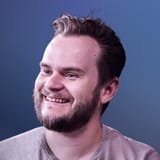
Scrimba's Learn Python course is 5.6 hours of fully interactive content taught by Olof Paulson across 58 parts. It covers the Python fundamentals beginners need: variables, data types, conditionals, loops, functions, lists, dictionaries, file handling, and project work.
The course uses Scrimba's proprietary scrim format, where learners pause screencasts and edit the instructor's code directly in the browser. There is no toggle between a video player and a separate editor. Learners write Python alongside the instructor from the first lesson and see results immediately.
The course is completely free, and a free completion certificate is included. Among free Python courses at this depth, Scrimba is the only one that is genuinely interactive throughout. Most alternatives are video-passive, text-only, or freemium with paywalled exercises.
Skip if: You want academic-grade depth on computer science fundamentals or hundreds of hours of structured exercises. Pair Scrimba with Harvard CS50P or the University of Helsinki MOOC for that.
Harvard CS50P: Introduction to Programming with Python
Best for: Learners who want academic depth and a recognized institution name
| Field | Detail |
|---|---|
| Platform | Harvard OpenCourseWare / edX |
| Instructor | Professor David J. Malan |
| Duration | 10 weeks of material |
| Format | Lectures + problem sets |
CS50P is Harvard's free Introduction to Programming with Python. It runs 10 weeks of material covering functions, variables, conditionals, loops, exceptions, libraries, unit testing, file I/O, regular expressions, and object-oriented programming. There are no prerequisites, and the course is designed for students with or without prior programming experience.
The OpenCourseWare version is free to audit. A verified certificate is available through edX as a paid option. CS50P sits inside Harvard's broader CS50 ecosystem, which is one of the most widely respected introductory computer science programs in the world.
The format is traditional: video lectures, weekly problem sets, and a final project. The problem sets are challenging by design and develop real problem-solving skill rather than just teaching syntax.
Skip if: You prefer interactive coding environments or self-paced bite-sized lessons. CS50P rewards focused study.
University of Helsinki: Python Programming MOOC
Best for: Rigorous learners who want university-grade exercises and progression
| Field | Detail |
|---|---|
| Platform | mooc.fi (University of Helsinki) |
| Instructor | Agile Education Research group |
| Duration | 14 parts, 200+ hours |
| Format | Text + automatically graded exercises |
The University of Helsinki Python Programming MOOC is a free 14-part Python course from the Department of Computer Science. It is split into Introduction to Programming (Parts 1-7, 5 ECTS credits) and Advanced Course in Programming (Parts 8-14, 5 ECTS credits).
The course material is freely available online with hundreds of automatically graded programming exercises. Students access guidance through Discord community channels and on-campus workshops. Completion requires passing exercises and a course exam.
This is the most rigorous free Python course on the list. The exercise volume forces real fluency, and the curriculum covers everything from basic syntax through OOP, testing, and database work.
Skip if: You want video instruction. The course is text-heavy with no lecture format.
freeCodeCamp: Scientific Computing with Python
Best for: Learners who want a recognized free certification
| Field | Detail |
|---|---|
| Platform | freeCodeCamp |
| Instructor | Self-paced curriculum |
| Duration | ~300 hours (estimated) |
| Format | Text + interactive projects |
freeCodeCamp's Scientific Computing with Python is a free certification covering data structures, algorithms, object-oriented programming, regular expressions, and recursion. Earning the certificate requires completing five projects: an Arithmetic Formatter, Time Calculator, Budget App, Polygon Area Calculator, and Probability Calculator.
The certificate is widely recognized in the industry and free to earn. It carries weight on resumes for entry-level Python roles, particularly when paired with portfolio projects.
freeCodeCamp notes that this curriculum is no longer being actively updated, with newer Python tracks under their current curriculum. The existing certification still teaches valid Python and is a useful credential, but check the latest curriculum for newer paths.
Skip if: You want Python 3 features taught with the latest patterns. The non-updated curriculum may feel slightly dated for advanced topics.
Coursera: Python for Everybody (Free Audit)
Best for: Learners who want a structured university-style specialization
| Field | Detail |
|---|---|
| Platform | Coursera (University of Michigan) |
| Instructor | Dr. Charles Severance |
| Duration | 32 hours (estimated, audit only) |
| Format | Video lectures + reading |
Python for Everybody is Dr. Charles Severance's beginner-friendly five-course specialization from the University of Michigan. The audit mode is free and includes lectures and reading materials covering Python basics, data structures, web data, databases (SQLite), and capstone analysis.
The specialization is one of the most enrolled programs in Coursera's catalog. Severance writes accessibly and assumes no programming background. The video format works well for learners who prefer structured passive instruction.
The audit mode does not include graded assignments or the Coursera certificate. Full access (graded work, certificate, peer-reviewed projects) requires Coursera Plus or per-course payment.
Skip if: You want hands-on coding from minute one or you specifically need the Coursera certificate without paying.
Python Official Tutorial (docs.python.org)
Best for: Developers who want to learn from the source of truth
| Field | Detail |
|---|---|
| Platform | python.org |
| Instructor | Python Software Foundation |
| Duration | Self-paced |
| Format | Reference text |
The official Python tutorial is maintained by the Python Software Foundation and stays current with the latest Python release. It covers core syntax, data structures, modules, errors, classes, the standard library, and idiomatic Python.
Nothing matches the official documentation for accuracy and longevity. It is also free of marketing, opinion, or padding.
That same focus is its limitation: the tutorial is a dense reference, not a guided learning experience. There are no exercises, no projects, no encouragement when something gets hard. It works best as a companion to a structured course or as a refresher for developers coming from another language.
Skip if: You are an absolute beginner with no prior programming background. Use a structured course first, then return to the official docs.
Google's Python Class
Best for: Working programmers who want a fast Python on-ramp
| Field | Detail |
|---|---|
| Platform | developers.google.com |
| Instructor | Nick Parlante (Google) |
| Duration | ~10 hours |
| Format | Written materials + lecture videos + exercises |
Google's Python Class was originally taught internally to Google engineers and is now publicly available under a Creative Commons license. It includes written materials, lecture videos, and exercises covering strings, lists, sorting, dictionaries, files, regular expressions, and command-line utilities.
The pacing is fast. Google's class assumes some prior programming experience (variables, loops, function calls) and uses Python to extend that knowledge rather than teach it from scratch.
Skip if: You have never written code before. This class is built for developers ramping up on Python, not absolute beginners.
Automate the Boring Stuff with Python
Best for: Practical learners who want immediate automation wins
| Field | Detail |
|---|---|
| Platform | automatetheboringstuff.com |
| Instructor | Al Sweigart |
| Duration | Self-paced |
| Format | Online book |
Al Sweigart's Automate the Boring Stuff with Python is the full text of the bestselling book, free to read online under a Creative Commons license. It teaches Python through practical automation projects: web scraping, Excel manipulation, PDF parsing, email handling, file management, and image processing.
The book has converted more new programmers to Python than almost any other resource. Its appeal is concrete: learners write working scripts that automate real tasks within the first few chapters.
The format is text rather than video, with chapter exercises and projects. Companion video lectures exist on Udemy as a paid product, but the full book is free indefinitely on the official site.
Skip if: You want video instruction or formal CS fundamentals (algorithms, data structures, OOP). Automate the Boring Stuff prioritizes practical scripting.
Comparison Table
| Course | Duration | Format | Certificate | Projects | Best For |
|---|---|---|---|---|---|
| Scrimba Learn Python | 5.6 hrs | Interactive scrims | Yes (free) | Built throughout | Hands-on interactive learners |
| Harvard CS50P | ~100 hrs (10 wk) | Video + problem sets | Audit free; paid via edX | 9 problem sets + final | Academic depth |
| Helsinki MOOC | 200+ hrs | Text + auto-graded | Exam-based completion | Hundreds of exercises | Rigorous self-learners |
| freeCodeCamp Sci Computing | ~300 hrs | Text + projects | Yes (free) | 5 required | Free certificate seekers |
| Coursera Python for Everybody (audit) | ~32 hrs | Video + reading | No (audit mode) | Yes (graded mode only) | University specialization |
| Python Official Tutorial | Self-paced | Reference text | No | None | Source of truth |
| Google's Python Class | ~10 hrs | Video + text + exercises | No | Yes | Fast on-ramp for programmers |
| Automate the Boring Stuff | Self-paced | Online book | No | Practical automation | Practical scripting |
What Should a Good Free Python Course Cover?
A solid free Python course should teach:
- Python 3.x syntax. Python 2 reached end of life in 2020 and should not be the primary version taught.
- Variables, data types, and control flow (if/else, for/while loops)
- Lists, dictionaries, sets, and tuples as core data structures
- Functions, scope, and modules
- File handling and basic I/O
- Error handling and exceptions (try/except)
- Object-oriented programming basics (classes, objects, inheritance)
- At least one or two projects you build yourself, not just toy examples
Red flag: any course in 2026 still teaching Python 2 as the primary version, or any course that skips OOP entirely. Modern Python codebases use classes heavily, and a learner who never sees OOP will struggle on real projects.
How to Choose the Right Free Python Course
The best free Python course depends on what you want from it:
- Want interactive, hands-on coding from minute one? Scrimba's Learn Python (5.6 hours, Olof Paulson)
- Want academic-grade depth with Harvard's name? CS50P
- Want a free, recognized certificate? freeCodeCamp Scientific Computing with Python
- Want rigorous university-style exercise volume? University of Helsinki MOOC
- Want a structured video specialization? Coursera Python for Everybody (free audit)
- Want immediate practical automation? Automate the Boring Stuff
- Want the source of truth? Python's official tutorial
- Already a programmer ramping up on Python? Google's Python Class
These courses pair well together. A common stack is Scrimba (interactive intro) followed by Automate the Boring Stuff (practical projects) followed by CS50P or the Helsinki MOOC (depth). The free options collectively cover everything most learners need; paid courses become useful mostly for niche specializations like data science or machine learning bootcamps.
What to Learn After a Free Python Course
Once you finish a free Python course and feel comfortable with the language, the next steps depend on your goal:
- Build two or three real projects for your portfolio. Web scrapers, automation scripts, and small APIs are good starting points.
- Pick a specialization: data analysis (pandas, NumPy), web development (Flask, Django), automation, or AI and machine learning.
- Learn SQL. Almost every Python role involves a database. Scrimba's Learn SQL (3.8 hours, free, taught by Gregor Thomson) is a good free starting point.
- Pick up AI engineering. Python is the dominant language for AI work. For developers ready to build AI-powered applications (RAG, agents, embeddings, MCP), Scrimba's AI Engineer Path (11.4 hrs, Pro) is the deep dive.
- Contribute to open source. Python has one of the most active open-source ecosystems, and contributing is a strong portfolio signal for Python developer roles.
A natural free progression is Python → SQL → an introductory AI or web framework course, then deeper specialization once you know which direction you want.
Frequently Asked Questions
What is the best free Python course in 2026?
It depends on learning style. For interactive hands-on coding, Scrimba's Learn Python (5.6 hours, Olof Paulson) is the only fully free, fully interactive Python course at this depth. For academic rigor, Harvard's CS50P is the gold standard. For a free recognized certificate, freeCodeCamp Scientific Computing with Python.
Can I learn Python entirely for free?
Yes. Python is the most-used language among people learning to code, with 71.8% of learners using it, and the ecosystem of free resources is unusually deep. Scrimba, Harvard, the University of Helsinki, freeCodeCamp, Google, and the Python Software Foundation all offer comprehensive Python training at no cost.
How long does it take to learn Python for free?
Beginner basics take 30 to 60 hours of focused study. A short interactive course like Scrimba's Learn Python (5.6 hours of video) typically expands to 15 to 25 hours including practice. University-grade courses such as CS50P and the Helsinki MOOC require 100 to 200+ hours of work.
Do I need any prior coding experience to start?
No. CS50P, the Helsinki MOOC, Scrimba, and freeCodeCamp are all designed for absolute beginners with no prerequisites. CS50P explicitly states that the course is for students with or without prior programming experience.
Is Python or JavaScript better as a first language?
Both are excellent first languages. Python is the most popular language among learners (71.8% of all learners) and has the most readable syntax. JavaScript is unavoidable if your goal is web development. Most career paths benefit from learning both eventually, but starting with Python tends to be smoother for absolute beginners.
Can I get a job knowing only Python?
Yes, especially in data analysis, scripting, automation, and AI or machine learning roles. For most software engineering jobs you will pair Python with SQL and Git, plus basic web fundamentals (HTML and CSS) for fullstack work.
Key Takeaways
- The best free Python courses in 2026 cover four distinct profiles: Scrimba's Learn Python for interactive practice, Harvard's CS50P for academic depth, the University of Helsinki MOOC for rigorous exercise volume, and freeCodeCamp's Scientific Computing with Python for a free certificate.
- Python is used by 57.9% of all developers and 71.8% of learners, with adoption growing faster than any other major language.
- The free Python ecosystem is deep enough that paid courses are rarely needed for fundamentals. Paid options become useful for niche specializations.
- A solid first stack is Scrimba (interactive intro) followed by Automate the Boring Stuff (practical projects) followed by CS50P or the Helsinki MOOC (depth).
- Avoid courses still teaching Python 2 in 2026, or that skip object-oriented programming entirely. Both are red flags for outdated material.
For paid Python options and specialized data science or machine learning courses, see Scrimba's full guide to the best Python courses for beginners. For a step-by-step learning roadmap, see how to learn Python in 2026.
Sources
- Stack Overflow. "2025 Developer Survey: Technology." 2025.
- Harvard University. "CS50's Introduction to Programming with Python."
- University of Helsinki. "Python Programming MOOC 2025." Department of Computer Science.
- freeCodeCamp. "Scientific Computing with Python Certification."
- Coursera. "Python for Everybody Specialization." University of Michigan.
- Python Software Foundation. "The Python Tutorial."
- Google for Education. "Google's Python Class."
- Al Sweigart. "Automate the Boring Stuff with Python."
- Scrimba. Course catalog including Learn Python, Learn SQL, and the AI Engineer Path.